
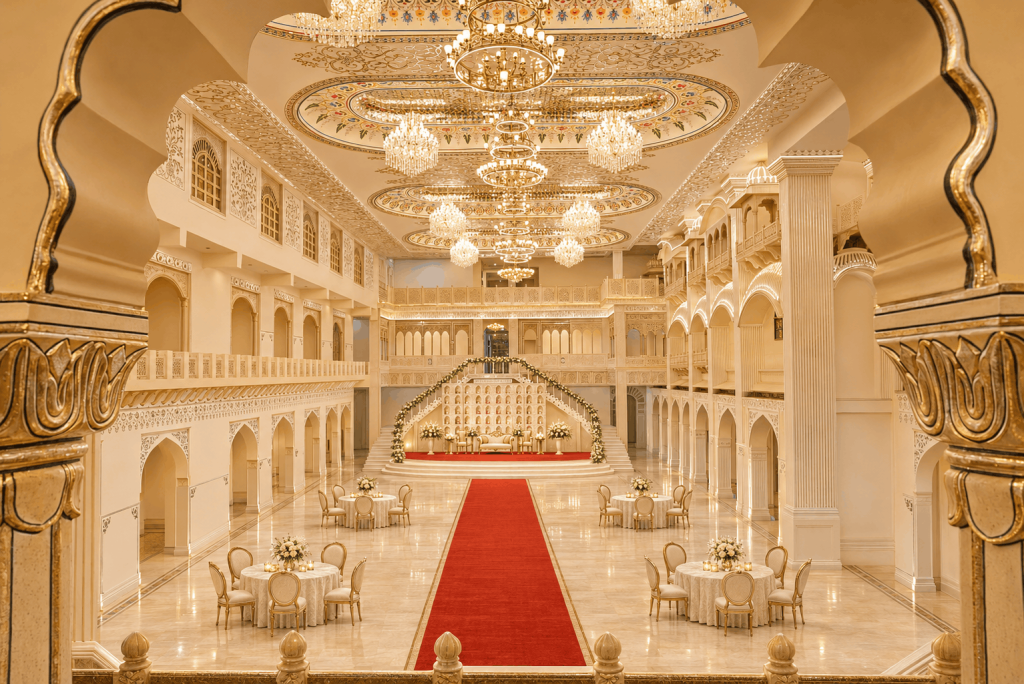
For a multi-day wedding, catering works best when each meal is planned around its function, timing and guests. Start with an estimated count for every event, collect dietary requirements, decide how each meal will be served and confirm the details with the venue in writing. This gives the families a useful plan to review before final guest numbers are due.
At Mahal Khas Palace in Bharatpur, couples can discuss menu arrangements for individual wedding functions with the team. Planning early helps avoid a common problem: treating every meal as one large wedding menu, even though a welcome dinner, Mehendi lunch, Sangeet evening and post-wedding brunch each have different needs.
Why plan each wedding meal separately?
A wedding weekend may include several meals, but guests will not approach them all in the same way. A welcome dinner may be relaxed, with relatives arriving at different times. A daytime function may call for a lighter meal, while the wedding reception may need a more substantial spread and a clear service plan.
Planning meal by meal helps the couple decide:
- Which guests are expected at each function
- When the meal should be served
- Whether food should be plated, buffet-style or arranged another way
- Which dietary requirements need attention
- How long guests will have to eat
- Whether the meal is part of the main programme or a casual gathering
If you are planning a destination wedding in Bharatpur, treat catering as part of the event schedule—not a detail to finalise after everything else. Guests’ arrival times, ceremony timings and venue changes all affect when food should be ready.
Build the guest count function by function
Your overall invitation list is not the same as the number of people who will attend every meal. Some guests may arrive on the second day, attend only the main ceremony or leave before the farewell brunch. Make a separate estimate for each function.
A simple planning sheet can include:
| Function | Estimated guests | Meal timing | Dietary notes |
|---|---|---|---|
| Welcome dinner | |||
| Mehendi or Haldi | |||
| Sangeet | |||
| Wedding ceremony and reception | |||
| Farewell brunch |
Use the same sheet to record when the venue needs the confirmed guest count and who will provide it. Ask how late changes are handled and whether the final count affects the menu or service arrangement.
Collect dietary information clearly
Ask guests about dietary needs early, but make the question specific. “Do you have any food requirements?” can prompt clearer answers than asking only whether someone is vegetarian. Guests may follow Jain practices, avoid particular ingredients, have allergies or need a meal prepared in a certain way.
Record each request against the function the guest will attend. Then share the list with the venue team and ask what can be accommodated. If a guest has a serious allergy, they should explain it directly to the catering team and ask about ingredients and preparation. Do not assume that a dish is safe based on its name alone.
Confirm any special meal arrangements again closer to the event. The family should know who is responsible for checking the request on the day, especially when several functions are happening in different spaces.
Choose a service style that fits the event
The way food is served affects how a meal feels and how smoothly guests move through the function. A buffet may suit a relaxed gathering where guests are comfortable choosing their own dishes. Plated service may work better for a formal event with a defined programme. Food counters can be considered when they suit the venue layout and the event schedule.
There is no single style that works for every wedding. Before deciding, ask:
- How many guests can be served comfortably at one time?
- Will the service fit the event’s timing?
- Is there enough space for queues and guest movement?
- How will older guests or guests with mobility needs be served?
- What setup, staffing or timing details should be confirmed?
For a reception or larger gathering, discuss the layout with the team at the Maharaja Surajmal Banquet Hall. Ask how dining, seating, stage arrangements and guest movement can work together in your proposed setup.
Match the menu to the time of day
The timing and length of a function should guide the meal. A daytime event may call for a different menu and pace from an evening celebration. If a ceremony is expected to run long, consider when guests will need refreshments or a full meal. If people are arriving after travelling, ask whether the schedule should leave time for them to settle before dinner.
Think about how the meal fits into the programme. Guests should not have to choose between eating and attending an important part of the celebration. Allow enough time for service, conversation and transitions between dining and the next event.
Consider children and older relatives
A wedding menu should account for the people who may need a little extra consideration. Families with children can ask whether suitable options are available and when those meals can be served. For older relatives, think about meal timing, seating distance and whether the serving arrangement makes it easy to access food.
Share practical needs with the venue team while the schedule is being planned. If a guest needs assistance, a special meal or a particular seating arrangement, confirm who will coordinate it on the day. Small details are easier to handle when they are part of the plan from the beginning.
Confirm what the catering proposal includes
Before approving a menu, ask for the proposal to state what is included for each function. Confirm the menu, service style, timings, guest-count deadline and any applicable charges or conditions. If you are considering live counters, special dishes or a change in the service format, ask whether those arrangements are available and how they affect the proposal.
Keep the approved menu and schedule in one place. Share the latest version with the family member or planner coordinating catering, and update it whenever a decision changes. If you have a wedding planner, agree who will communicate final changes to the venue.
Use a final catering checklist
Before the wedding, review these details with the venue team:
- Estimated and confirmed guest count for each function
- Meal timings and expected service duration
- Menu selections and service style
- Dietary requests and the person responsible for checking them
- Children’s meal requirements, if any
- Dining layout and guest movement
- Arrangements for late arrivals or schedule changes
- Included items, additional charges and payment terms
- The contact person for catering coordination on the day
A thoughtful wedding menu is not simply a long list of dishes. It is a plan that suits the people attending, the time of each function and the way the celebration will unfold. At Mahal Khas Palace, couples can discuss their planned functions and catering needs with the team, then confirm the final arrangements for their dates.
Frequently Asked Questions
How should couples plan catering for a multi-day wedding in Bharatpur?
Make a separate meal plan for each function, including the estimated guest count, timing, service style and dietary requests. Check when the venue needs final numbers and who will coordinate changes. At Mahal Khas Palace, couples can discuss menus function by function with the wedding team and confirm which arrangements are available for their dates and selected venues.
Can we request different menus for each wedding function in Bharatpur?
A welcome dinner, daytime function, reception and farewell meal may each have different timing and guest needs, so couples can ask about planning them separately. Share the purpose and estimated count for each event. Mahal Khas Palace can discuss function-wise menu arrangements and explain what can be accommodated. Confirm the final menu, service style and any charges in the written proposal.
How should guests’ dietary requirements be handled at a Bharatpur wedding?
Collect dietary information early and record the specific requirement, rather than using a broad label alone. Share the details with the catering team and ask what can be accommodated. Guests with serious allergies should speak directly with the venue team about ingredients and preparation. Mahal Khas Palace can discuss dietary requests in advance, but each arrangement should be confirmed for the relevant function.
What catering details should couples confirm with Mahal Khas Palace in Bharatpur?
Confirm the menu for every function, estimated and final guest counts, service style, meal timings, dietary arrangements, children’s needs, setup requirements and any additional charges. Ask when the final numbers are due and who will communicate changes. Mahal Khas Palace can clarify these details for the selected dates and venues, so the family and catering team work from the same plan.
How can wedding catering be coordinated if the schedule changes in Bharatpur?
Agree in advance who can approve a timing change and who will notify the venue team. Ask how much notice is needed to adjust a meal and what changes may not be possible at short notice. Keep the latest schedule with the wedding planner or family coordinator. Mahal Khas Palace can explain its coordination process and the practical limits for catering changes during the event.